The parent-child relationships among Ray, Moth, Tom, and Row
The Salt PathThe parent-child relationships among Ray, Moth, Tom, and Row are shaped by a family life built through shared work and by the abrupt loss of the parents’ home, income, and expected future. When Moth receives a suspected diagnosis of corticobasal degeneration just as the family is being displaced, Ray worries that the children are being left outside the most consequential change in their lives; Moth insists that they have spoken openly with him and are finding ways to cope.
Family life built through work
Ray and Moth describe their adult life as a shared undertaking, and their account of home is also an account of family labor. They had restored a tiny Victorian terraced house, returning from work to continue working on it: stripping wallpaper on Sundays and pointing chimney stacks late at night. Selling that house, they put the money into a larger dream of owning a place with land and escaping the nine-to-five routine.
That ambition demanded time and effort from the whole household. While other families took their children to the beach, Ray and Moth dug drainage ditches for the farm they were building. Later, Ray remembers those thirty years as having been consumed by the work and then lost with the home. Her grief is not only for a building or for security, but for the family memories and shared future that the home had held.
Displacement and limited means
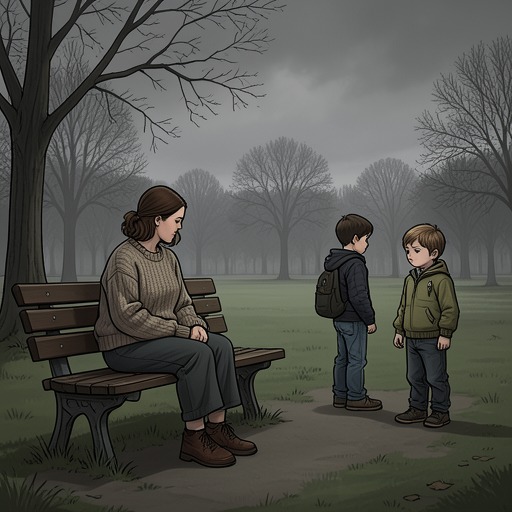
After the parents left their home, Tom and Row could not offer them a place to stay. Both were students in shared accommodation and had barely enough money to support themselves. The parents, meanwhile, had lost their holiday-rental business and its income, leaving them with little ability to rebuild an independent life. The children’s inability to help is presented as a consequence of their own precarious circumstances, not as indifference.
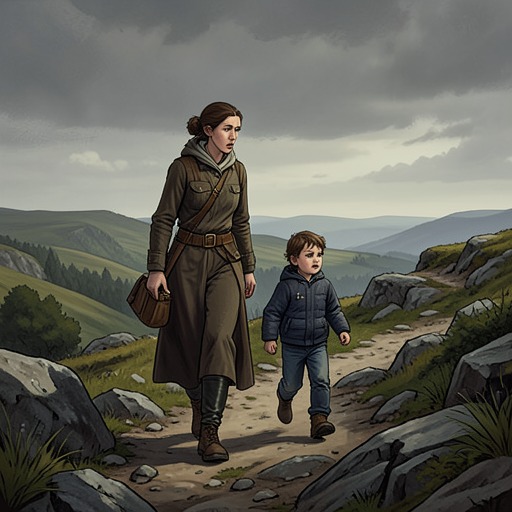
The family’s separation was especially painful because they were only about twenty miles from home, yet could not return. Ray and Moth spent a short time at Moth’s brother’s house, knowing they would have to leave when his family returned. At the same time, Moth’s suspected diagnosis made ordinary plans for work and housing feel uncertain. A consultant in Liverpool said that he believed Moth had corticobasal degeneration, while also explaining that the diagnosis could not be confirmed by a test. Ray felt she could not leave Moth to work: she wanted to spend their remaining time of relative health with him and preserve memories for the future.
What the parents tell the children
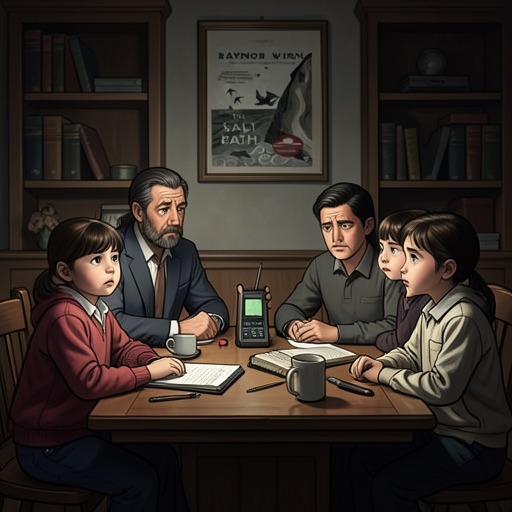
At a campsite near Pendennis Castle, Ray and Moth talk directly about the gap in what the family has said. Ray has always told the children about their everyday troubles and the small hurts in their lives, but she has not talked with them about Moth’s illness or what it could mean for the family. She wonders whether the parents have abandoned Tom and Row by leaving them to face the crisis without that conversation, and fears that the situation will leave lasting emotional scars.
Moth gives a different account of the children’s communication with their parents. He says that they do not talk to Ray about the illness because it is Moth who is unwell, but that they do talk to him and have discussed it frankly. He acknowledges that the change is hard for them all and says the children are strong. His response does not make the illness or displacement easier; it challenges Ray’s fear that silence means the children have been left alone with it.
A family changed, not resolved
The diagnosis unsettles the future the parents had imagined together: a life in which they would reach old age and die side by side. Ray’s sense that her life and Moth’s are inseparable makes the prospect of his decline a family crisis as well as a personal one. Later, Moth describes waking unsure what he is supposed to do, having to remind himself to eat, drink, or go to the bathroom. The illness is thus present not only as a feared future but as an increasingly practical change in daily life.
The account leaves the children’s long-term experience unresolved. It establishes that they are young adults with their own financial constraints, that Ray fears the family has not spoken enough about what is happening, and that Moth reports frank conversations with them. Their relationship is therefore shown neither as broken nor as untouched by crisis: it is a bond under pressure, with different lines of communication and a shared family life being remade by illness and homelessness.